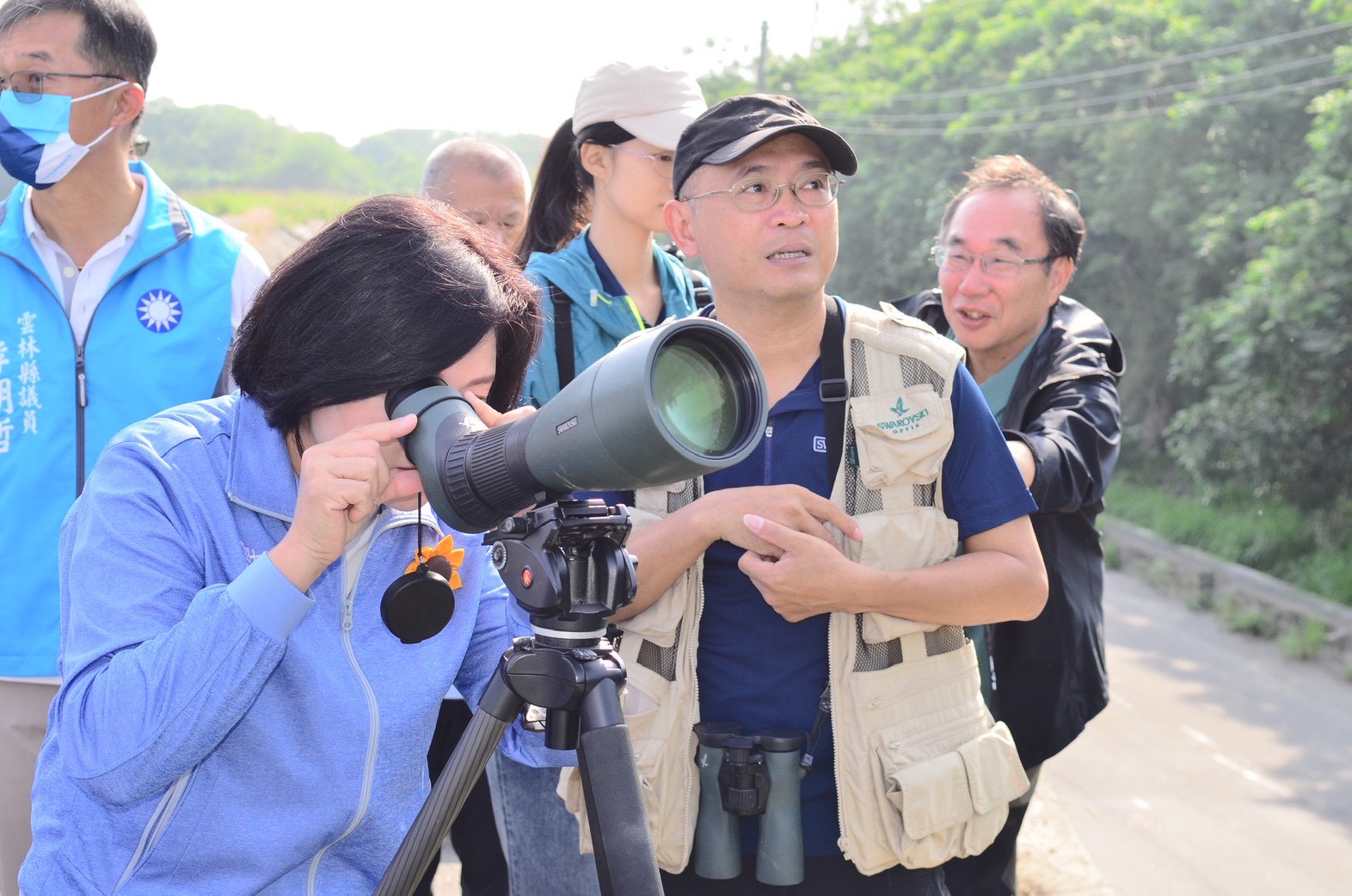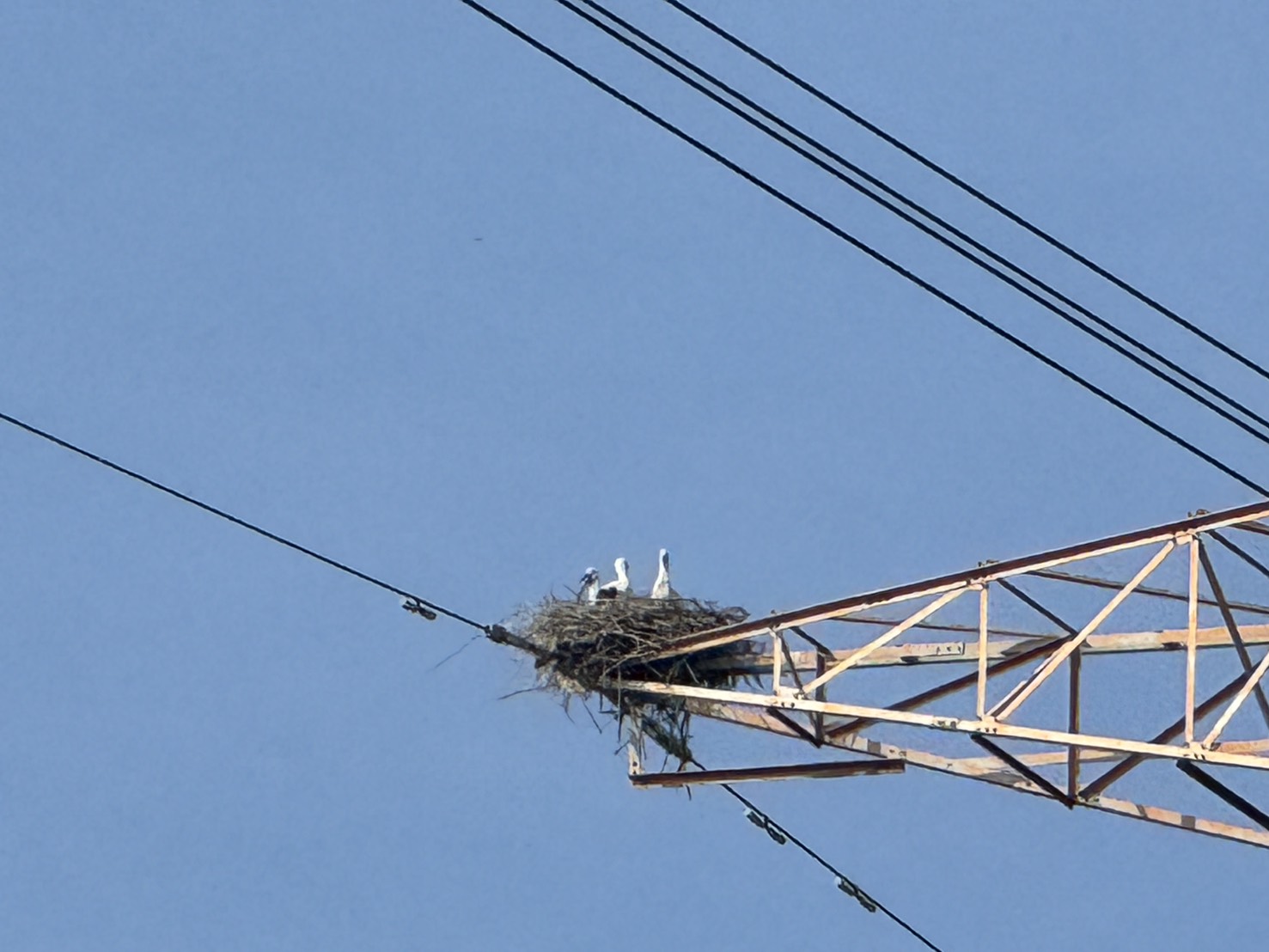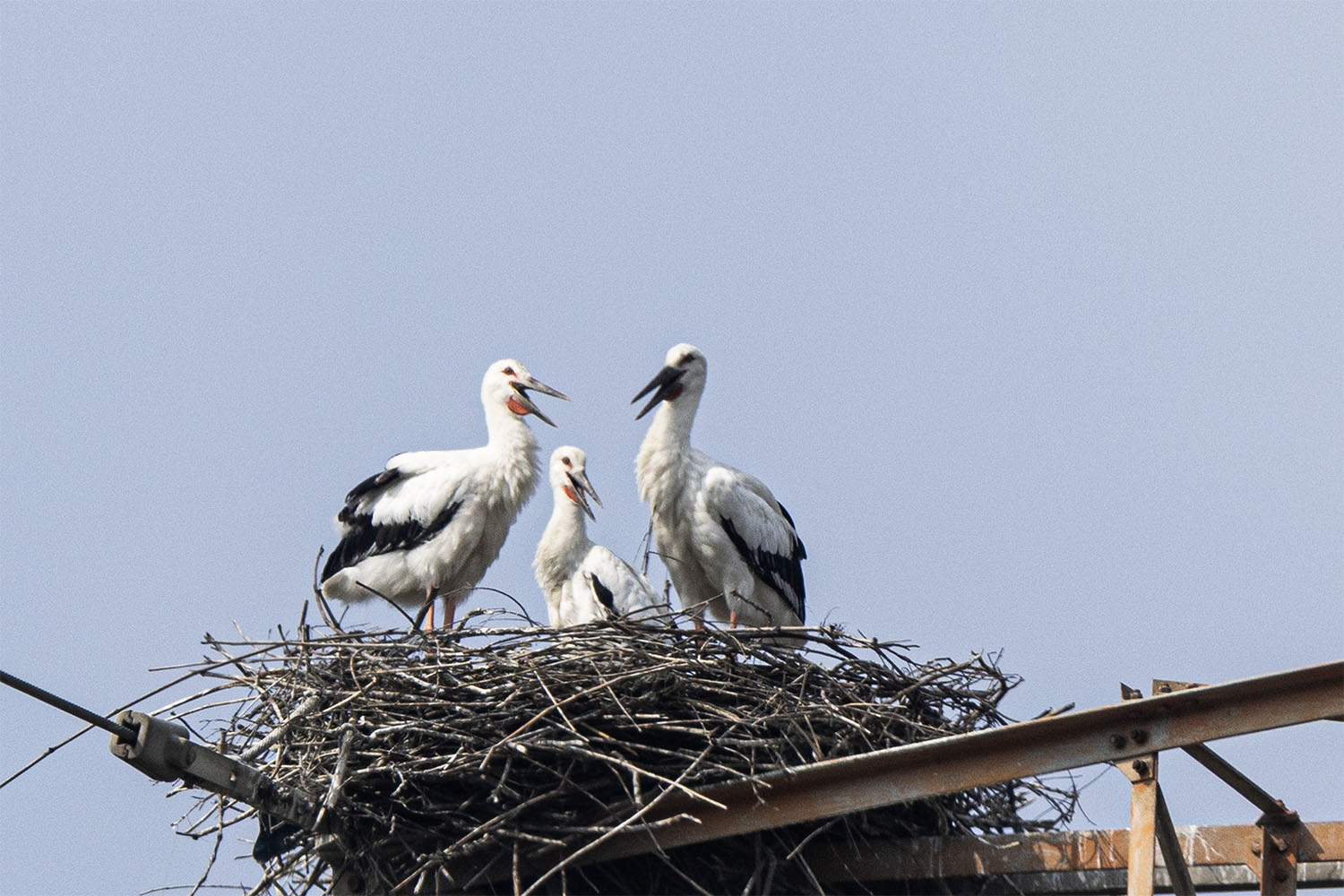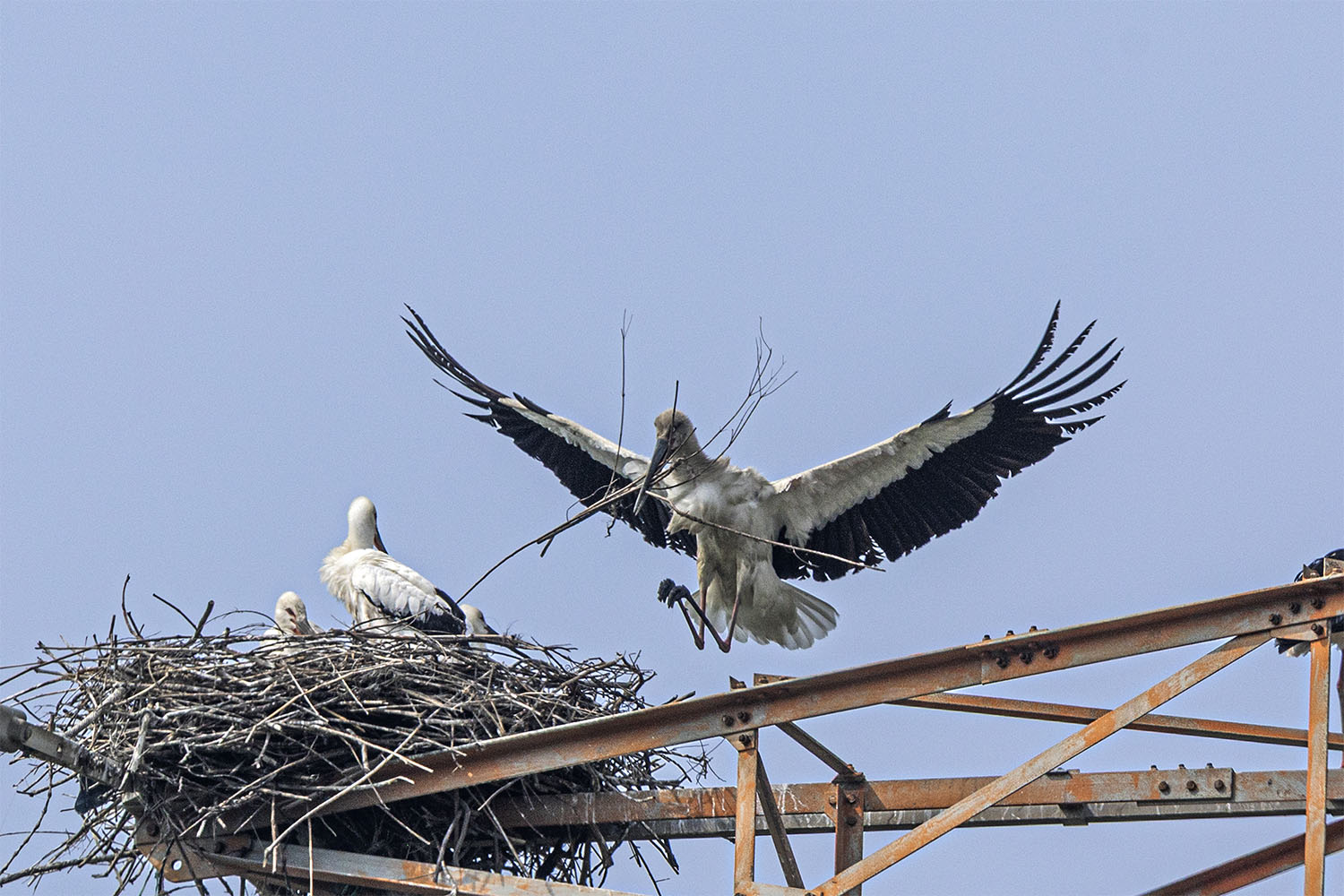
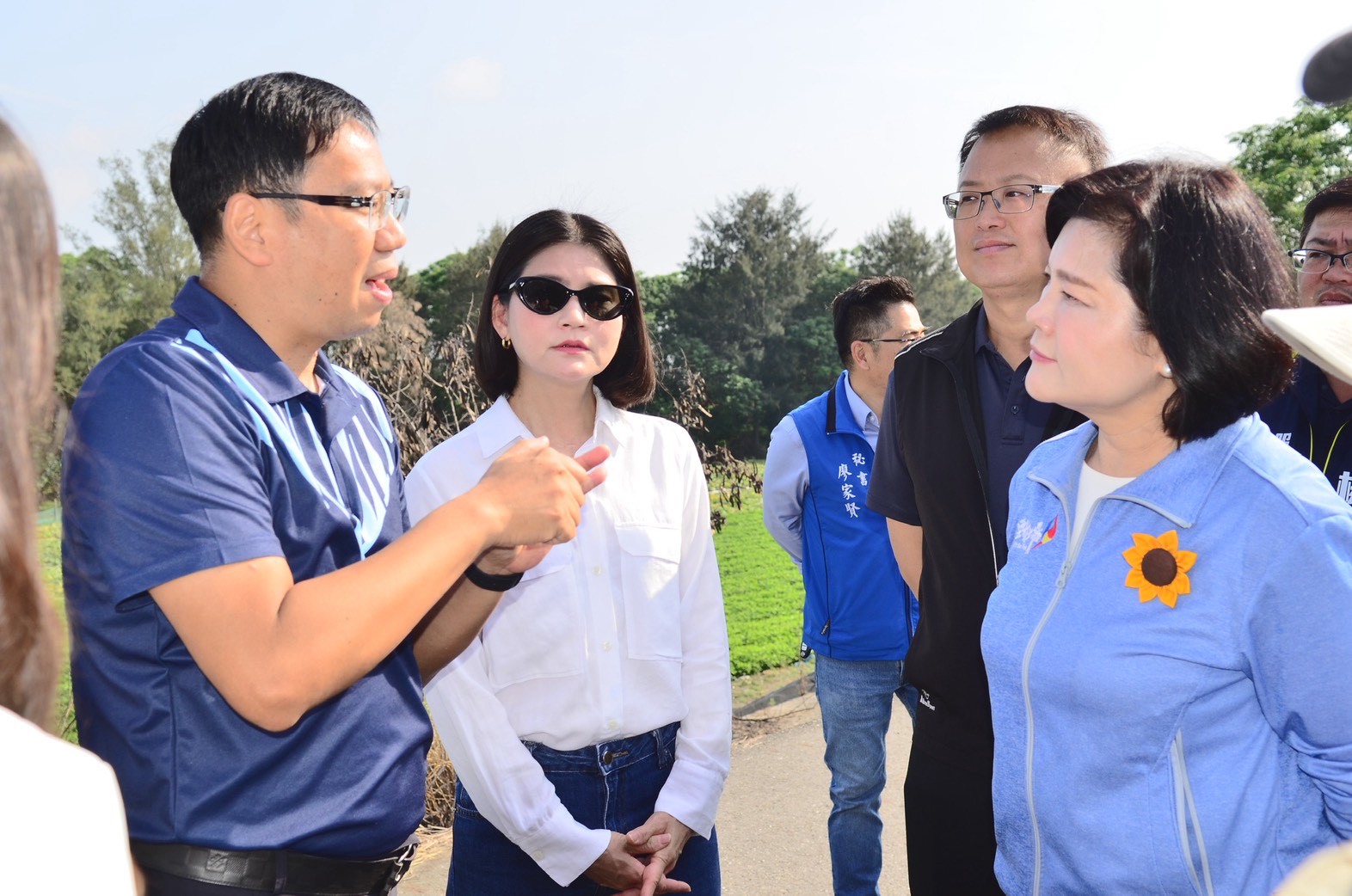
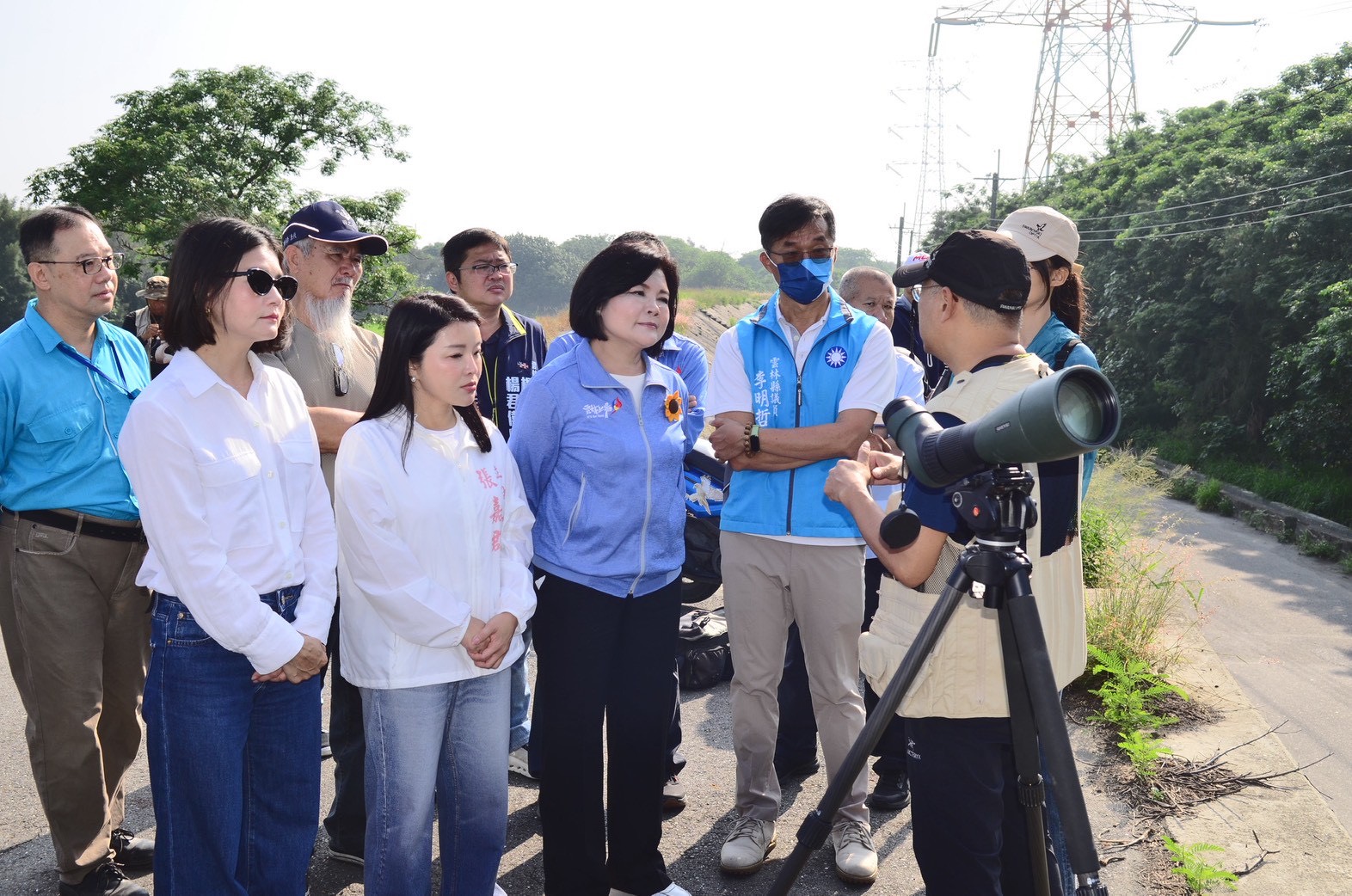
The Oriental Stork, an protected endangered bird species with barely 3,000 individuals remaining worldwide, recently built a nest and successfully hatched chicks on a high-voltage transmission tower along the Jhuoshuei River in Yunlin County. This marks the first recorded successful breeding of the species in a natural environment in Taiwan, representing a significant milestone in conservation efforts. On the 27th, Yunlin County Magistrate Li-shan Chang visited the site to learn more about the Oriental Stork’s habitat and breeding conditions under the professional guidance of Chong-han Wu, Supervisor of the Yunlin Wild Bird Society (雲林縣野鳥學會). She also inspected the results of dust prevention and environmental improvement efforts along the Jhuoshuei River.
Magistrate Li-shan Chang stated that after receiving reports that planned electrical wiring work at Mailiao Power Plant could affect the Oriental Stork, she immediately instructed the Environmental Protection Bureau to request that the power plant suspend the work and review the scope of construction. At the county government’s request, MAI-LIAO POWER implemented several unprecedented “ecological accommodation” adjustments during maintenance work on the high-voltage towers, including restricting tower access in all but necessary cases, postponing maintenance work, and strengthening insulation at critical points. These measures, combined with remote monitoring, help prevent adult birds from abandoning their nests or being injured by electric shocks, achieving a balance between power supply reliability and ecological conservation.
The Oriental Stork’s successful nesting and breeding in Yunlin demonstrates that the local environment provides suitable habitat conditions and serves as a testament to the improvements made along the Jhuoshuei River. In coordination with the Executive Yuan, Yunlin County has worked with relevant agencies, including the Fourth River Management Branch, Water Resources Agency, Ministry of Economic Affairs and the Forestry and Nature Conservation Agency to implement the “Jhuoshuei River Dust Prevention and Improvement Action Plan (濁水溪揚塵防制及改善行動方案).” Through measures such as water coverage, vegetation restoration, and exposed land suppression, the plan has effectively improved dust issues and air quality. Following the implementation of the first and second phases of the action plan, dust event days along the Jhuoshuei River decreased by more than 90%, dropping from 59 days in 2017 to 2 days in 2022. The annual average concentration of suspended particulate matter (PM10) also improved from 64 μg/m³ to 39 μg/m³. Although typhoons and heavy rainfall in recent years damaged some dust prevention facilities, resulting in an increase in dust events, continued cooperation between central and local governments kept dust event days at 11 days in 2025, while the annual average PM10 concentration further declined to 36.7 μg/m³. These results demonstrate continued and stable improvements in overall environmental quality. The Jhuoshuei River estuary has also gradually transformed from exposed sandbars into an important habitat for plants and wildlife.
Director Qiao-wei Zhang of the Environmental Protection Bureau added that the Jhuoshuei River estuary has now attracted more than 250 bird species, including rare species such as the Black-faced Spoonbill and the Oriental Stork. This demonstrates that Yunlin has entered a new phase, transitioning from dust control to ecological restoration. In addition to using annual subsidies from the Ministry of Environment to carry out dust warning response measures and environmental cleanup, this year the Bureau successfully secured approximately NT$9.8 million in funding over the next two years to develop environmental education programs related to dust prevention, ecological conservation, and migratory bird monitoring. In the future, the Bureau will work with communities, schools, and the Yunlin Wild Bird Society (雲林縣野鳥學會), while introducing AI image recognition technology to enhance bird identification and habitat monitoring. Ecological documentaries will also be produced to fully record the Jhuoshuei River’s transformation from a dust-control site into an ecological habitat, strengthening the depth and diversity of future environmental education programs.
Magistrate Li-shan Chang emphasized that the Oriental Stork’s successful nesting and breeding in Yunlin is not only a significant ecological event but also a concrete achievement of Yunlin’s transformation in environmental governance. In the future, the county government will continue integrating central and local resources, combining technology, education, and conservation efforts while strengthening habitat maintenance to create a sustainable environment where humans and nature coexist harmoniously, transforming the Jhuoshuei River from a “dust-prone river” into an “ecological corridor.”